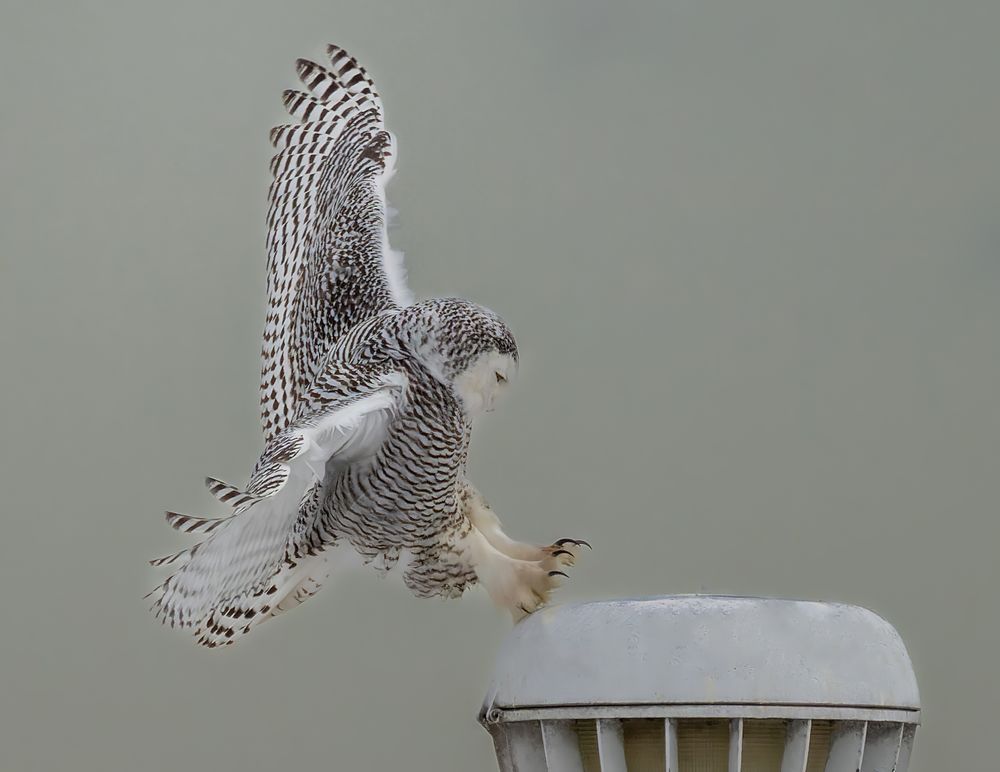
n this moment of controlled descent, the Snowy Owl carries a presence far older than the landscape it hovers over. Its wings rise like soft panels of white cedar, each feather slowing the air into silence. The calm, focused posture and the reaching talons give the owl the appearance of an ancient spirit returning to the land — an impression deeply echoed in northern Indigenous understandings of this bird.
Across many First Nations of the Arctic and subarctic, Snowy Owls are regarded as beings of knowledge and quiet authority. Some stories speak of the owl as a guide between worlds, a watcher who moves effortlessly between the physical and the spiritual. Others view the owl as an ancestral messenger — a presence that arrives in stillness, carrying reminders of patience, observation, and the wisdom of those who came before.
Seen through this lens, the owl’s descent becomes more than a landing. It is a ceremonial return, a gesture of calm power shaped by ancient winds and northern light. Stripped of distraction, the scene invites viewers to witness the bird not only as a hunter of the tundra, but as an old soul of the North — a figure whose silence holds the weight of story, memory, and time.