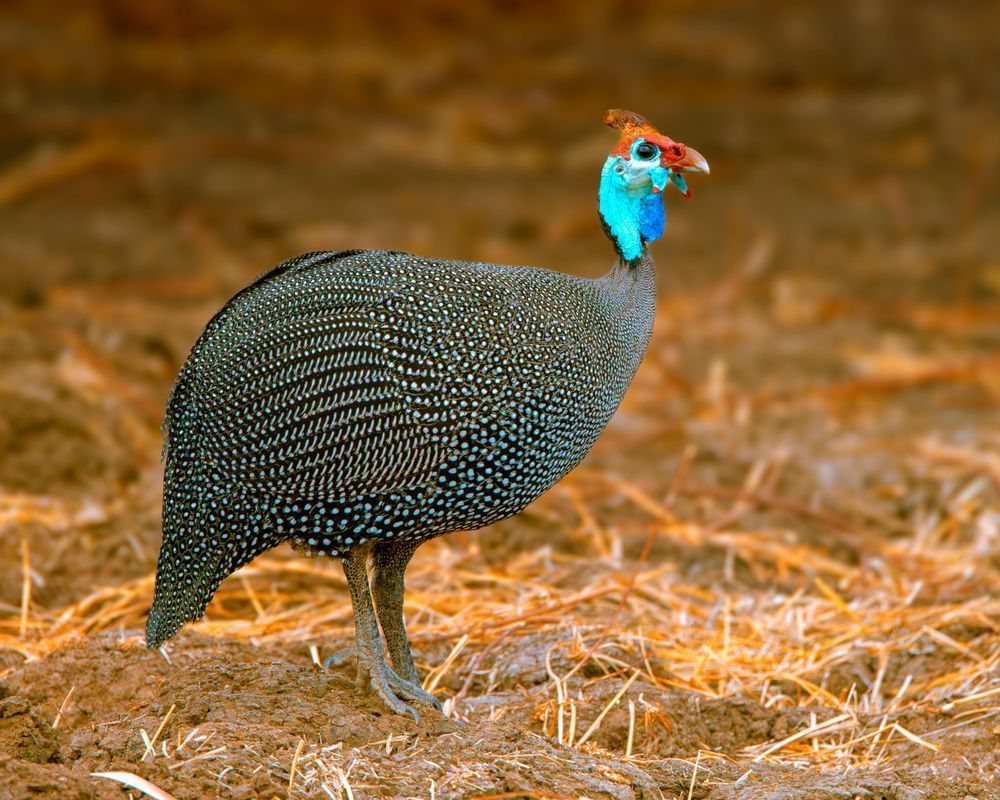
The helmeted guineafowl is one of Africa’s most instantly recognizable birds—bold, busy, and full of character. Its speckled black-and-white plumage looks almost hand-painted, while the striking electric-blue and red face, crowned by a bony “helmet,” gives it an almost prehistoric presence. Up close, the detail is remarkable, each tiny dot forming a living pattern that shimmers as the bird moves through dust and dry grass.
Often seen in noisy groups, guineafowl act as the bush’s early-warning system. Their constant chatter and sharp alarm calls can alert everything nearby—sometimes even photographers—to approaching danger and predators. I once watched a leopard spring up from its sleep, instantly focused on the sound of their calls. The guineafowl’s colourful red and electric-blue head offers little camouflage—less concealment and more the McDonald’s golden arches of the savanna. Yet despite their comical running style and head-bobbing walk, they are sharp-eyed, highly social, and surprisingly resilient, thriving in some of Africa’s harshest environments.
There’s something wonderfully raw and authentic about photographing a helmeted guineafowl. It may lack the grandeur of a lion or the elegance of a giraffe, but it captures the true rhythm of the African landscape—busy, loud, and endlessly alive.