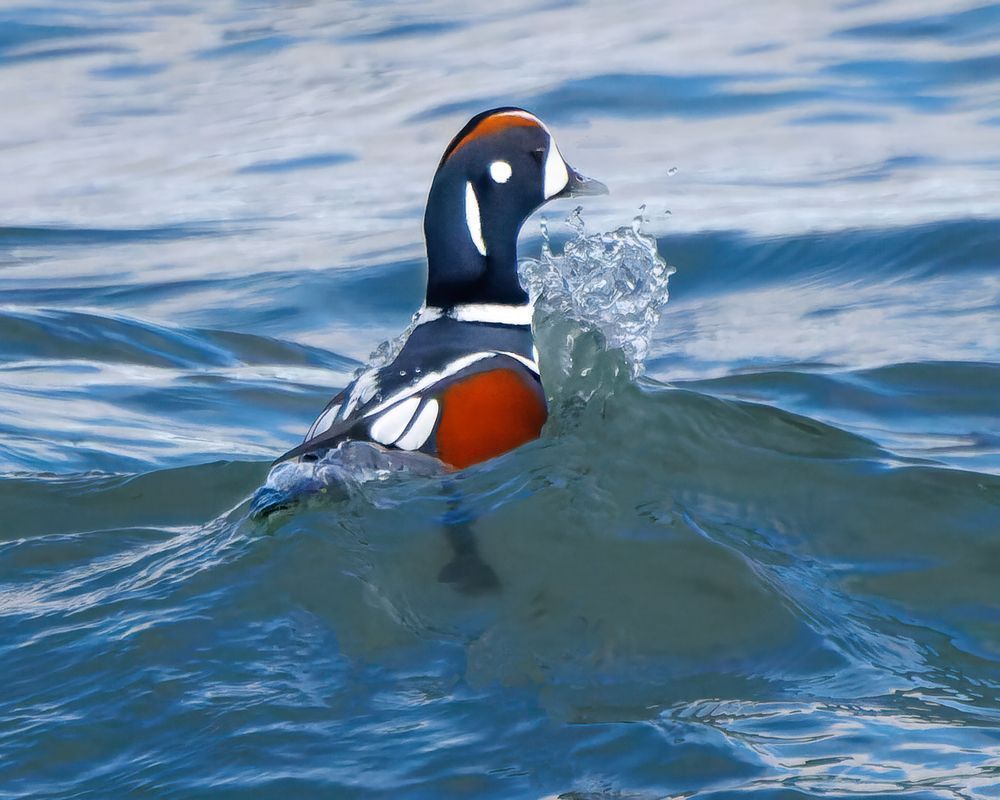
Getting a decent photo of a harlequin duck has eluded me for years. Every time I think I am close to capturing the perfect shot, they seem to disappear as quickly as they came. It is as if their brilliant colours – blue, black, white and orange – act not only as camouflage but also a warning signal for them to make a swift escape. Harlequin Ducks are very rare and special visitors to southern Ontario; originating from the Arctic where they breed and live in rather hostile conditions. It's fascinating to consider how these unique birds are adapted to living in such challenging environments with their alluring colours possibly playing a role in their survival. More research and observation into this species seems necessary to uncover the secret of why their vibrant hues may be protecting them in the far north.
Harlequins are incredibly resistant to cold temperatures and often live in colder climates close to water, and rocky seashores. . In addition, their unique bill shape allows them to effectively forage on rocky lake bottoms for food. They even stand out nutritionally as harlequin's diet consists mostly of arthropods, such as aquatic insects and crustaceans. For example, they may feed on stonefly larvae, shrimp and freshwater crayfish.
As a wildlife photographer, my goal when capturing images of animals like these ducks is to find an angle that can establish an instant connection with the viewer through the animals eyes. However, it can be hard to create such emotion when their unique feature, their eyes, are so difficult to spot and camouflaged in blue feathers. However, I found the wavy water off Lake Ontario and the heavenly sunshine worked well to highlight the amazing colours and features of this beautiful bird