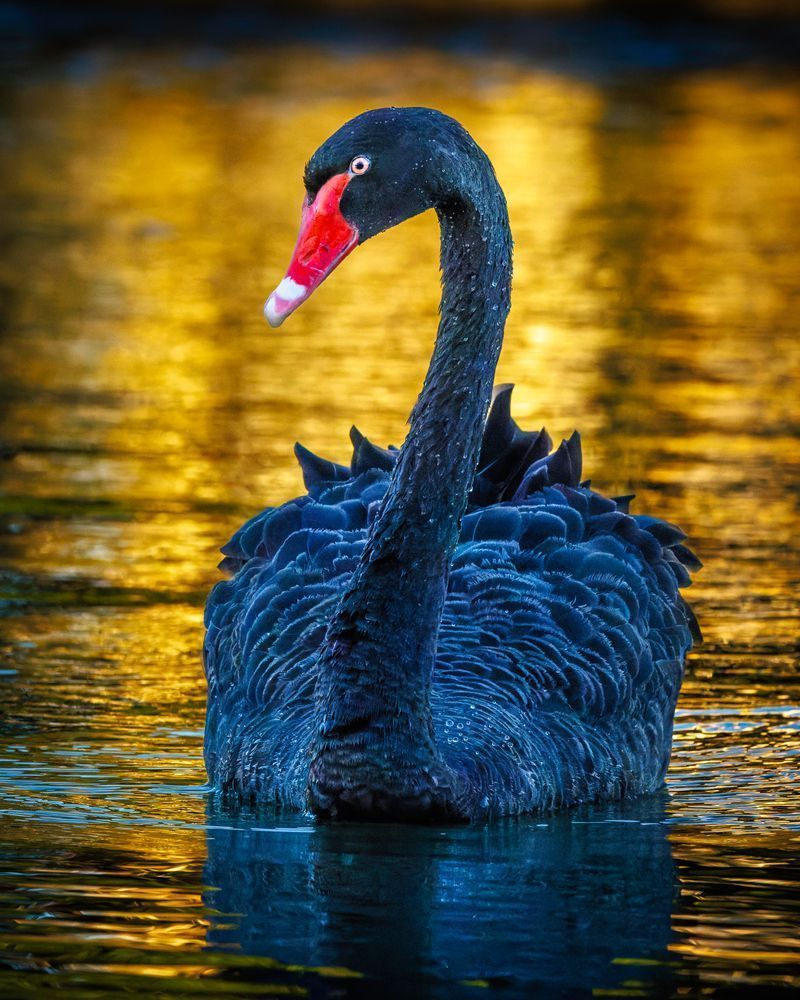
While surveying the magnificent scenery at Ko Olina on O'ahu, my eye drifted towards a curious sight – four gracefully gliding black swans in the pond beside the golf course. I moved low to the ground with my camera. I was enamoured by their billowing inky feathers and glowing red bills sparkling against the morning sky.
As a former risk manager, I was familiar with the concept of 'black swan events' - highly unpredictable and momentous occurrences with vastly profound impacts, like terrorist or nuclear disasters.
Black swan theory originated in 16th century Europe, when black swans were thought to be nonexistent, until discovered by Dutch explorers in Australia in 1697. These magnificent birds can also now be found throughout Africa, New Zealand, Papua New Guinea and parts of Indonesia and China.
Interestingly, black swans do not migrate, and cannot fly because of the size of their wings and their excess weight. Therefore, they are imported into high profile locations as decorative enhancements, like this exotic golf course in Hawaii. The golfing staff treated the swans, like pets, when they left the water, to waddle on the greens.
How could such a beautiful bird be associated with bad omens? At that moment however, it seemed as if these beautiful creatures had come to show me another side of 'the black swan' - one of tranquil beauty and elegance, rather than one of damaging surprise. While it may have been just another encounter for them, it certainly was a refreshingly different and profound “black swan event” for me.