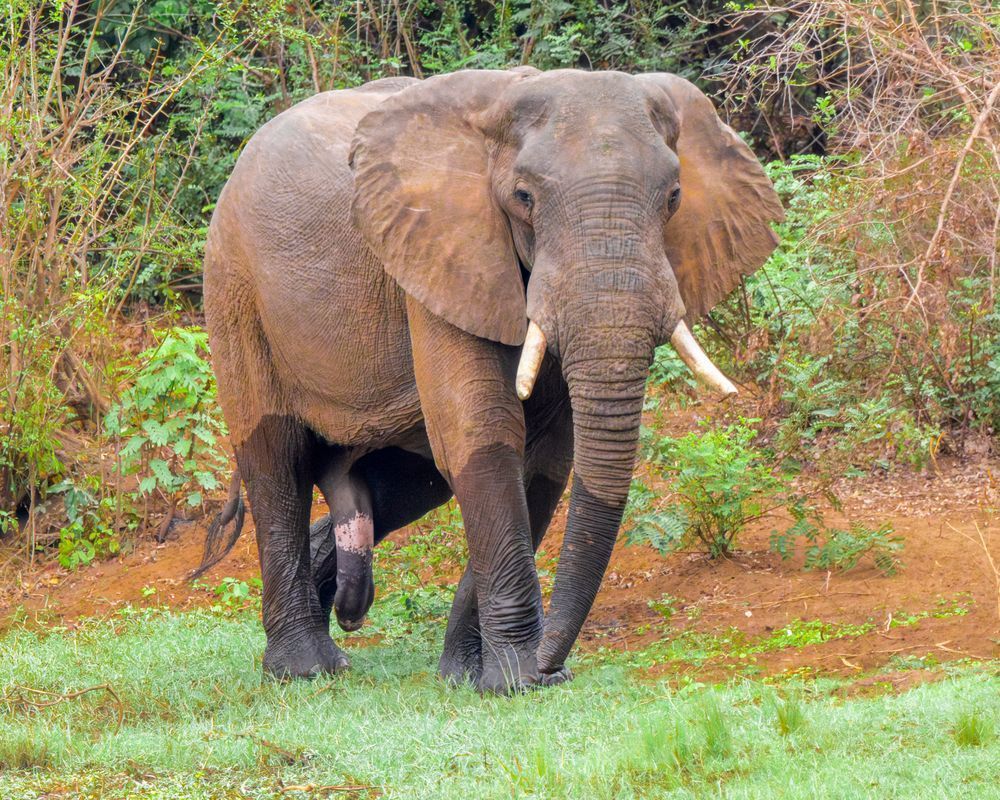
There’s nothing quite like standing in the presence of an African elephant. They move with a slow, deliberate confidence—massive, ancient, and utterly at home in their world. In this moment, captured on camera, you can see both their power and their gentleness: the steady footsteps, the sweeping trunk, the quiet intelligence in those deep, watchful eyes. Every wrinkle, every scar tells a story of a life lived in the wild.
African elephants are the largest land animals on Earth, yet their behavior is surprisingly sensitive and complex. They travel in tight-knit family groups, communicate through rumbles we can’t even hear, and show emotion in ways that feel profoundly familiar—comforting a distressed calf, mourning the loss of a companion, celebrating a good rain after months of drought. Watching an elephant approach is like watching the landscape itself come alive.
But scenes like this are never guaranteed. Across Africa, elephants face shrinking habitat, human–wildlife conflict, and the lingering threat of poaching. Encounters like this one are a reminder of what’s at stake—and of the responsibility we share to protect these giants and the ecosystems they shape. To see an elephant walking freely through its natural home is a privilege, and every sighting feels like a gift from a wilder, older world.